A well-packed backpack makes every hike easier. Before you start packing, you should reduce your gear to the bare essentials to keep the weight as low as possible. Your shoulders and back will thank you for it. When packing a hiking or trekking backpack, it’s also especially important to distribute the weight evenly so the backpack doesn’t pull you backward while hiking on challenging terrain.
How much weight can I put in the backpack?
This table gives you an idea of how much gear you should pack in your backpack. However, especially on multi-day hikes, don’t overestimate your stamina or underestimate the weight of a fully packed backpack.
Backpack category
Volume
Pack weight
hiking backpack
15 – 30 liters
3 – 6 kilogram
touring rucksack
35 – 45 liters
8 – 10 kilogram
trekking rucksack
50 – 60 liters
12 – 18 kilogram
trekking rucksack
70 – 90 liters
> 18 kilogram
Tips for packing right
The following tips apply to packing any backpack, whether it’s a hiking backpack, a touring backpack, or a trekking backpack:
Pack only what you need, but don’t take anything you don’t need.
Use the external compression straps to secure the contents of the backpack even more securely. If the backpack isn’t fully loaded, use them to compress the pack. The goal is always to keep the backpack as close to your back as possible.
Make sure to place heavier items in the center of your backpack. This will prevent the weight of the backpack from pulling to one side.
Think about which items you need to access quickly and put them in the outside pockets, for example.:
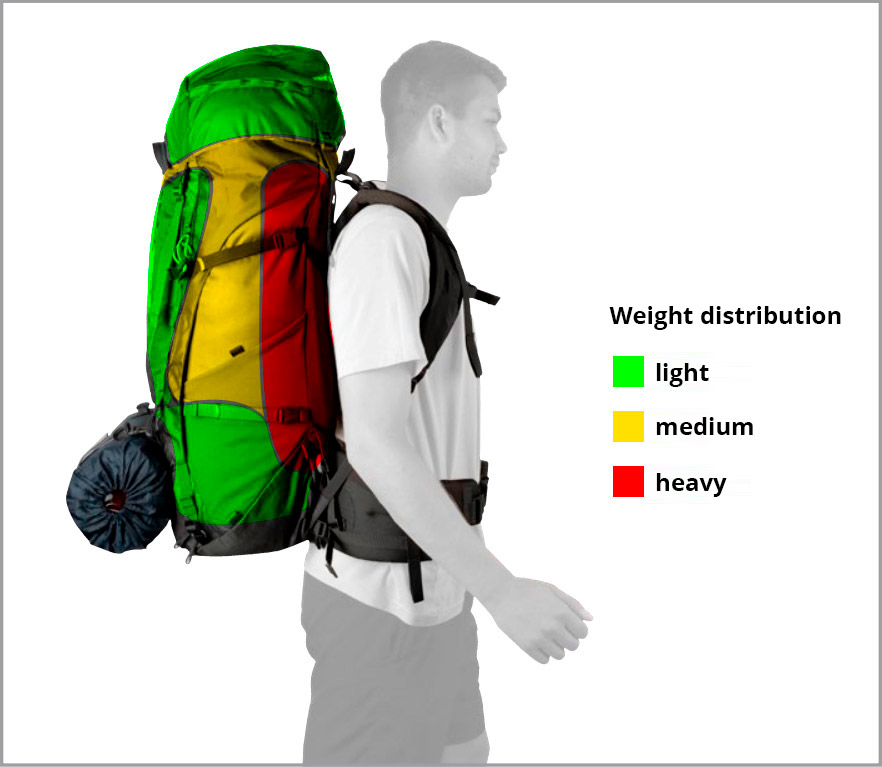
To move safely through the terrain with a large, fully packed trekking backpack, maintaining the correct center of gravity is essential. That’s why you should pack your trekking backpack so that it doesn’t throw you off balance or pull you backward while hiking. Here’s how to do it:
Place heavy gear (food, tent, cooking gear) close to your body.
Store medium-weight gear (clothing) in front of that.
Put smaller items (hat, gloves, toiletries bag) at the top of the backpack.
The lid compartment is ideal for your first-aid kit, sunglasses, and other items you want to access quickly.
The bottom compartment is reserved for your sleeping bag.
If there is a front pocket, you can use it to store rain gear, for example.
Important: Adjust the trekking backpack to fit your back length so that the hip belt sits centered on your hips. Only then will the carrying system transfer part of the load to your hips, relieving pressure on your shoulders and spine.
Tips for planning your trekking gear
When it comes to a trekking backpack, one rule applies more than with any other backpack: Take only what you need. A fully packed trekking backpack is heavy and not easy to carry. While Tatonka’s Yukon trekking backpacks are designed to carry up to 25 kilograms, that doesn’t mean you have to max out that weight capacity. Depending on your build, fitness level, and stamina, you should pack significantly less into your backpack. Even experienced trekkers do this, by the way—simply because it allows you to move more easily and safely.
Create a packing list for a longer trekking trip: Start by noting down the absolute essentials, then add anything else you’d like to bring.
Think about how much food you’ll need for each day. Freeze-dried trekking food can save a significant amount of weight.
Look specifically for tips from other hikers who have already completed the trek you’re planning. This will help you figure out what you absolutely must bring for this specific trek.
Do a test pack well in advance. This will show you whether your backpack has enough storage space. You can then take your time to decide what you might be able to leave behind.
If you’re hiking in a group: Divide the gear (e.g., tent, stove, food) among several backpacks.
How to make the most of your trekking backpack’s storage space
Use compression stuff sacks. This helps reduce the bulk of your clothing, tent flysheets, and sleeping bag. Stuff sacks also help keep your gear organized. Waterproof storage bags provide additional protection against moisture for the contents of your backpack..
Stuff the tent flysheet and sleeping bag into the compression stuff sack without folding them. This makes the best use of the available space.
Roll your clothes as tightly as possible.
Use small, stackable cooking sets.
Bring only the absolutely necessary hygiene and personal care products. Transfer them into small tins and containers.
Use biodegradable outdoor soap that is suitable for both personal hygiene and washing dishes and clothes.